Hedge Trimming in Blackheath
Hedge Trimming Blackheath provides a focused hedge trimming service in Blackheath for gardens that need tidy lines, healthier growth and a finish that suits the planting style already in place. We work on routine seasonal cuts, shape management and reductions that keep hedges under control without stripping them bare. The aim is to leave each hedge looking balanced, with the cut matched to the species, the site and the result you want.
Our hedge work covers formal boundaries, mixed garden hedges and taller screening plants that have started to lose shape. Where useful, we can combine trimming with related garden work such as garden maintenance, lawn mowing or garden clearance, so the finished borders and access routes feel properly looked after rather than just clipped in isolation. If you are comparing options or planning a wider refresh, a plain enquiry is the easiest way to start.
Need hedge trimming in Blackheath? Use the main pages on this site to learn more about the available work, then request a quotation when you are ready. We can help with straightforward maintenance cuts as well as more involved reshaping, depending on the hedge and the condition it is in.
What hedge trimming can include
A good hedge trimming visit is not only about removing fresh growth. It also involves judging the hedge’s natural form, checking how dense the growth has become and deciding how much to take off without leaving visible gaps. Some hedges need a light tidy to preserve a neat profile, while others benefit from a firmer reduction to restore usable width along paths, driveways or boundary edges. The work is shaped around the plant, not forced into one standard cut.
On suitable hedges, trimming can help maintain a clean, crisp outline through the growing season. On older or more overgrown hedges, the emphasis may shift to gradual recovery: bringing the line back, reducing awkward protrusions and improving the overall balance of the foliage. When a hedge has become too tall or too wide for its setting, a carefully planned cut can make it easier to maintain in future without causing unnecessary stress to the plant.
Because hedge types vary, trimming methods need to vary too. Some species respond well to regular clipping and keep a smart shape for longer; others are better managed with more measured pruning and less frequent correction. That is why it is often helpful to describe the hedge’s height, length and current condition when asking for a quotation. It allows the work to be matched more closely to what the hedge actually needs, rather than assuming every hedge is the same.
Routine maintenance for neat boundaries
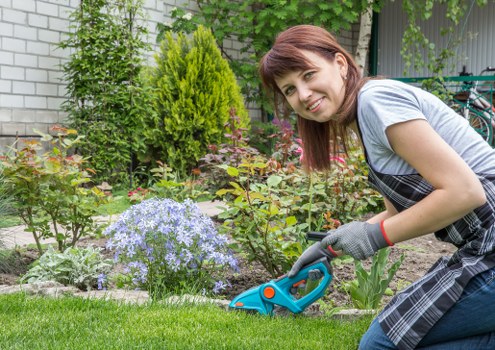
Routine hedge maintenance suits customers who want the garden to stay orderly rather than waiting until the growth becomes difficult to manage. Regular trimming helps keep hedges within their intended footprint, especially where a boundary line, driveway edge or front garden setting needs a consistently smart appearance. It also makes later cuts more predictable, because the hedge is managed before it becomes uneven or difficult to reach evenly.
When hedges are cut at sensible intervals, the result is often better light, easier access and a more even finish along the full length. Consistency matters: a hedge that is maintained little and often generally needs less correction than one left untouched for a long period. We can support that approach with planned trimming for domestic gardens and with larger ongoing work where several hedges need attention in the same visit.
If you are deciding how often to trim, the hedge’s purpose is a useful guide. A decorative hedge usually benefits from a tidier, more regular approach, while a privacy hedge may be allowed slightly more softness if that suits the planting and the look of the garden. The best trimming plan is one that respects both the practical boundary and the natural growth habit of the hedge itself.
Shaping, reduction and corrective cutting

Not every hedge needs the same kind of attention. Some only need a light shape correction, while others need a more noticeable reduction to restore control. Corrective cutting is often relevant when a hedge has started to lean, bulge or push beyond its usual line. In those cases, the work is less about cosmetic neatness alone and more about getting the hedge back to a manageable size without removing more than is sensible in one go.
Where hedges have become top-heavy or uneven, reducing the height in stages may be the most responsible route. A gradual approach can be kinder to the plant and more successful visually, especially where the hedge is part of a front boundary or visible from the street. We also take account of the lower sections, because a hedge can look unbalanced if the top is reduced but the sides are left crowded or jagged.
For customers comparing services, it helps to think in terms of outcome. Do you want a hedge that is simply tidier, one that is clearly smaller, or one that needs reshaping after a period of neglect? Clear instructions make quotations more accurate and help set realistic expectations for the work. If the hedge has awkward access, nearby planting or mixed growth within the same line, mentioning that early can also help the estimate reflect the job properly.
Hedge types, site conditions and finish
Different hedge types call for different levels of detail. Formal hedges are often cut to achieve clean edges and a level top, while more informal hedges may benefit from a softer finish that keeps the garden looking natural. If the hedge forms part of a shared boundary, the priority may be to keep the line even and avoid overreaching the available space. On taller hedges, safety, access and the quality of the final edge all become more important.
Site conditions matter too. A hedge beside paving may need careful handling so that debris does not spread across the approach, while a hedge beside flower beds may need a more controlled cut to protect the surrounding planting. The intended finish should also be discussed. Some customers want a sharp ornamental look; others want a practical screen that is tidy but not over-styled. Both are valid, but they call for different trimming decisions.
Useful details to mention when you ask for a quotation include the hedge length, approximate height, whether both sides are accessible and whether you would like clippings removed. You do not need to overcomplicate the request. A short description of the hedge and a simple note about the result you want is usually enough to begin. If you are ready to move forward, send the basic job details and ask for a quotation.
Related garden services

Some customers prefer to combine hedge trimming with other garden work so the outside space looks finished as a whole. Where the site needs more than one task, it can be useful to coordinate hedge work with landscape gardening, landscaping or decking services if those projects are already planned. That way, the hedge work can be timed to fit around changes to borders, paths or seating areas rather than being treated as a separate interruption.
We also support properties where hedge trimming forms part of a broader maintenance pattern. For example, a garden may need clipping, mowing and occasional clearance in the same period, especially after periods of rapid growth. In those situations, the aim is not to add extra complexity, but to make the garden easier to manage by grouping sensible tasks together. This can be especially helpful when a hedge has spilled into an area that also needs tidying elsewhere.
When customers want a quotation, it is usually enough to identify the hedge work first and then mention any linked tasks. That keeps the request focused, while still allowing the wider scope to be considered where relevant. If a hedge is part of a bigger refresh, say so in plain terms and ask for pricing based on the work you need rather than on assumptions about the whole garden.
About Blackheath
Blackheath is an area on the edge of south-east London best known for its wide, open common and long association with movement across the capital. The heath itself has been a distinctive open landscape for centuries, and today it remains one of the defining features of the district. Its broad expanse gives the area a different feel from the denser streets around it, with long views across grass, mature trees and the surrounding neighbourhoods. Blackheath railway station, opened in the nineteenth century, helped strengthen its links with central London, while the wider district developed as both a residential and social centre. The name is also closely associated with the historic Blackheath Henge area in the local landscape of memory, and with the many forms of civic, sporting and cultural activity that have used the common over time. The village centre has a recognisable character of its own, with shops, cafés and everyday services gathered near the heath. Nearby architecture ranges from Georgian and Victorian terraces to later residential streets, creating a varied townscape around the open space. The common remains a focal point for walks, informal recreation and events, and it also acts as a visual anchor for the district. As a result, Blackheath combines open land, urban edges and strong local identity in a way that is easy to recognise and hard to confuse with surrounding places.
Pricing factors and quotation details
Quotation requests are usually easier to assess when they include the practical facts that affect the amount of trimming involved. Hedge length, height, density and accessibility all play a part, as do any corners, steps, slopes or tight spaces that make the work slower. If the hedge has not been cut for a while, it may need more time than a recently maintained one. These differences are normal and should be reflected in the estimate rather than guessed at.
Removal of cuttings can also influence the scope. Some customers want the clippings taken away, while others have their own arrangement for composting or disposal. It is also helpful to say whether the hedge sits close to a wall, fence or planted border, because that can affect how carefully the job needs to be carried out. A clear request lets the quotation focus on the real work, not on generic assumptions.
To keep the process straightforward, please share the hedge type, the rough dimensions and the result you want. If you are comparing options, you can ask for the trimming alone or for trimming with debris removal, depending on what suits the site. A simple request is enough to begin, and the details can be refined once the basic scope is understood.
Choosing the right level of hedge work

Choosing the right level of hedge work depends on how the hedge is used and how much change you want to see. A lightly maintained decorative hedge may only need a tidy pass to keep its outline sharp, while a screening hedge may be allowed a little more mass so it continues to provide privacy. Where the hedge is mature, the decision may be between preserving its current shape and making a more decisive correction to bring it back within bounds.
It is often worth thinking about the hedge’s future maintenance as well as the immediate cut. A well judged trim can make the next visit easier, because the hedge remains even and easier to follow along its length. If the hedge has grown awkwardly in places, a sensible reduction now may prevent repeated difficulty later. That is especially relevant where the hedge defines a formal edge or sits in view from the front of the property.
Contact us for a quotation when you are ready to discuss your hedge trimming in Blackheath. You can also review pricing and quotes if you want to understand how requests are handled before sending details. Once you have a clear idea of the hedge and the finish you need, the next step is simple: ask for a quote and we will take it from there.
Planning the work and preparing the visit
Before a hedge trimming visit, it helps to make the cutting line as accessible as possible. Moving light garden items away from the hedge, giving access to gates or side paths and noting any delicate plants nearby can all make the work more straightforward. If there are areas where access is limited, it is better to mention them in advance so the job can be planned with that in mind. This is especially useful where the hedge sits close to structures or shared boundaries.
For larger or more complicated hedges, a few photographs and a short written description can be useful, as long as they are sent as part of a concise enquiry rather than a long explanation. The aim is to communicate the hedge’s size, position and condition clearly. When the work is planned properly, the trimming itself can be carried out more efficiently and with less chance of missed sections or uneven edges. That makes the finished result easier to live with.
We keep the focus on practical hedge work: cutting, shaping, reducing and tidying in a way that suits the garden. If you need a service that is tidy, measured and specific to the hedge in front of you, this is the right place to begin. A short message is enough to request a quotation and start the process.